
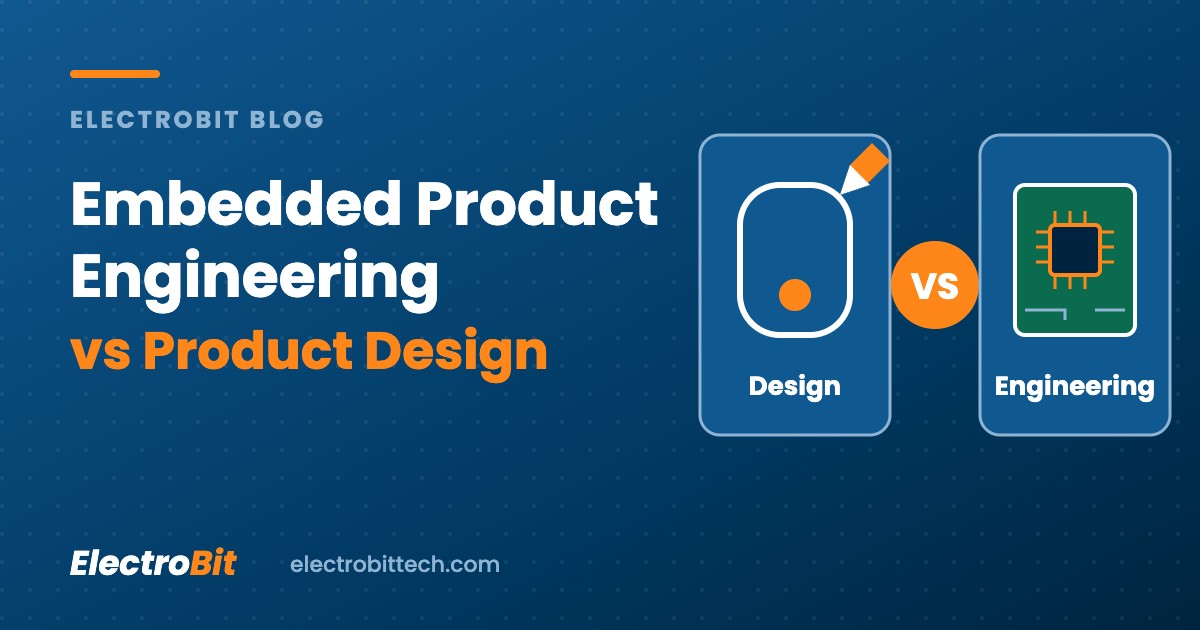
When companies plan a new electronic product, two terms come up again and again: product design and embedded product engineering. They are related, but they are not the same thing. Mixing them up can lead to the wrong partner, a missing skill set or a product that looks great but cannot be certified or built.
This guide to embedded product engineering vs product design explains what each discipline covers, where they overlap and how to decide what your project needs.
What Is Product Design?
Product design (often called industrial design) shapes how a product looks, feels and is used. Product designers focus on:
- Form, size, materials, colors and finish
- Ergonomics and user experience
- Enclosure concepts, sketches, renders and 3D models
- Brand fit and the unboxing experience
The output is a product that people want to hold, use and buy.
What Is Embedded Product Engineering?
Embedded product engineering makes the product work. It covers the electronics, firmware, software and connectivity inside the enclosure, plus everything needed to certify and manufacture it. Typical work includes:
- System architecture and component selection
- Schematic capture and PCB design
- Firmware, RTOS or embedded Linux development
- Wireless connectivity, cloud integration and OTA updates
- Verification, validation and compliance testing
- Production support, test fixtures and obsolescence management
The output is a reliable, certifiable product that a factory can build at volume. Read more about our embedded product engineering services.
Embedded Product Engineering vs Product Design: Key Differences
| Aspect | Product design | Embedded product engineering |
|---|---|---|
| Main question | How should it look and feel? | How does it work, reliably and safely? |
| Focus | Form, ergonomics, user experience | Electronics, firmware, software, connectivity |
| Typical tools | Sketches, CAD surfacing, renders | Schematic and PCB tools, compilers, debuggers, test rigs |
| Key outputs | Industrial design, enclosure models | PCB files, firmware, test reports, BOM |
| Measures of success | Usability, appeal, brand fit | Performance, power, cost, certification, yield |
| Regulatory role | Limited (labels, materials) | Central (FCC, UL/IEC 62368-1, industry standards) |
Where the Two Overlap
The best products come from teams that work together early. Common overlap points include:
- Enclosure and PCB fit: board shape, connector placement and mounting points must match the industrial design.
- Antenna placement: metal finishes and tight enclosures can block wireless signals, so engineers and designers must agree on antenna location.
- Thermal design: processors and power stages need a path to shed heat without making the product too hot to touch.
- Buttons, displays and LEDs: the user interface designers imagine has to be driven by firmware and hardware engineers build.
- Battery size: the power budget set by engineering decides how much battery the design must make room for.
When Do You Need Each?
You mainly need product design if the electronics already exist (for example, a proven board) and you are creating a new look, enclosure or user experience around it.
You mainly need embedded product engineering if the product’s value is in what it does: new sensing, control, connectivity or intelligence. This also applies when you are updating an existing product because of component obsolescence, new features or cost reduction.
You need both if you are building a new connected product from scratch, which is the case for most consumer, medical and industrial devices.
How to Make Both Teams Work Together
- Run a joint kickoff with shared requirements, including size, battery life and target cost.
- Agree on a mechanical-electrical interface document early: board outline, keep-out zones, connector and antenna positions.
- Hold design reviews with both teams at every stage gate.
- Build early “looks-like” and “works-like” prototypes, then merge them into one design.
Our embedded product engineering process explains where these reviews fit in a full program.
Conclusion
Product design makes people want your product. Embedded product engineering makes it work, pass certification and come off the production line at the right cost. For most electronic products you need both, working side by side from day one.
Already have an industrial design and need the electronics, firmware and production support behind it? Talk to our embedded engineering team.
Frequently Asked Questions
Is product design the same as embedded product engineering?
No. Product design focuses on how a product looks, feels and is used. Embedded product engineering focuses on the electronics, firmware and software that make it work, and on making it certifiable and manufacturable.
Which comes first, product design or engineering?
They should start together. Early industrial design sets size and shape limits, and early engineering sets limits on what electronics, batteries and antennas can fit. Working in parallel avoids redesigns.
Does every electronic product need embedded product engineering?
Any product with a microcontroller, processor or wireless connection needs embedded engineering for its hardware and firmware, even if the industrial design is simple.
Can one company handle both product design and embedded engineering?
Some can. Many OEMs pair an industrial design firm with an embedded engineering partner and run regular joint reviews so the two streams stay aligned.
Electrobit Engineering Team
Our hardware, firmware and software engineers design embedded products for OEMs across the United States, from concept to production.
On this page
Need an embedded product engineering partner?
From concept to production, with an NDA before discovery.
Related articles
Embedded Product Engineering for Consumer Electronics
Consumer devices must be small, low-cost, low-power and certified. Here is how embedded product engineering makes that possible.

Benefits of Embedded Product Engineering Services
Eight practical ways an experienced embedded engineering partner helps OEMs launch faster, spend less and support products for longer.
Embedded Product Engineering vs Product Design
Product design and embedded product engineering are often confused. Here is what each one covers and how they work together.
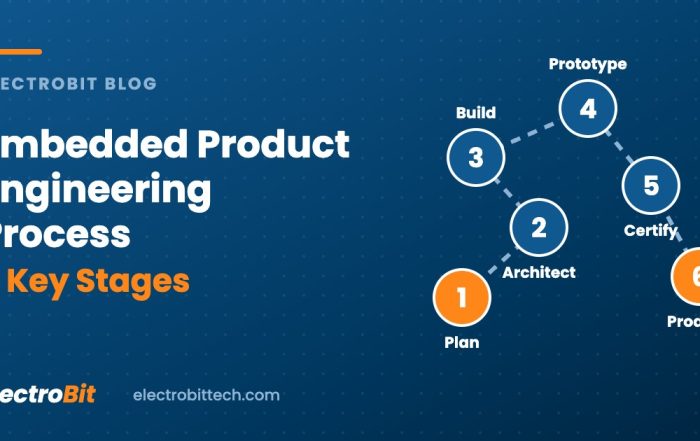
Embedded Product Engineering Process: 6 Key Stages
A clear, stage-by-stage look at how an embedded product moves from idea to mass production, and what to check before each step.